
A finisher's sock is one of the most-worn pieces of race merchandise a run club or charity event ever produces — it goes home with every single participant, not just the podium finishers. This guide covers what race directors, run club coordinators, and charity event organisers actually need to know before ordering custom running socks, from fit and material through to timing an order around race day.
- Who orders custom running socks, and why
- What a running sock needs that a general crew sock doesn't
- Custom crew socks vs. dedicated running construction
- Cheap custom mens athletic socks: where the trade-offs actually are
- Branding a race sock: sponsor logos, event dates, and bib numbers
- Timing your order around race day
- What to check before ordering for an event
- Frequently asked questions
Who Orders Custom Running Socks, and Why
"Custom running socks" searches split across a few distinct buyer types, each with a different priority:
- Race and marathon event directors — ordering finisher socks or race-pack merchandise for hundreds to thousands of participants, usually against a fixed event date
- Run clubs — smaller, recurring orders in club colours, often with member-specific sizing and a standing relationship with a supplier
- Charity runs and fundraising events — one-off orders where the sock itself doubles as a fundraising or awareness item, sometimes sold separately from race entry
- Corporate running and wellness teams — companies sponsoring or entering a corporate relay or charity 5K, wanting branded socks as part of a broader wellness or team-building push
Run clubs and event directors are the highest-stakes segment here — a race sock that doesn't perform or doesn't arrive on time is a visible problem on the one day it can't be fixed.
What a Running Sock Needs That a General Crew Sock Doesn't
A running sock faces a narrower, more intense set of demands than a general athletic or dress sock: sustained repetitive impact, heat build-up over distance, and — for a single-use race sock — the expectation of performing well on the very first wear, with no break-in period.
- Arch and structural support — Solos' Custom Branded Athletic Socks use NeuWave™, a zigzag knit architecture that increases sock-to-shoe contact and reduces internal slippage, which matters over a full race distance in a way it doesn't over a short gym session
- Moisture management — organic cotton and bamboo blends both perform reasonably here, but a sock that stays wet against the skin for hours is where blisters actually start
- Heel and toe reinforcement — the two highest-friction points on any foot during sustained running, and the first place a poorly constructed sock shows wear
A finisher's sock only needs to survive one event, but it needs to survive it well — a participant who gets blisters from race merchandise remembers that, and associates it with the event brand, not just the sock.
Running vs. Other Athletic Sock Categories
Running sits alongside several other technical sport categories that share overlapping but distinct construction priorities. Our guide to designing high-performance custom athletic socks covers the general athletic construction decisions that apply across running, court sports, and gym use, while our custom cycling socks guide covers a related but distinct endurance category — cycling's low-profile, second-skin fit differs meaningfully from a running sock's need for cushioned heel and toe impact absorption, even though both are endurance sports with similar moisture-management demands.
Custom Crew Socks vs. Dedicated Running Construction
"Custom crew socks" is a broader, higher-volume search term than "running socks" specifically, and it's worth being clear about the overlap. A standard crew-length construction — ankle to mid-calf — covers most race and club use cases perfectly well; a genuinely specialised running-specific sock (contoured left/right fit, targeted compression zones, minimal-seam toe construction) is a narrower, more technical product than most event organisers actually need.
| Use Case | What's Actually Needed |
|---|---|
| Charity 5K or fun run finisher sock | Standard custom crew sock, branded with event name/date — comfort and branding matter more than technical running-specific features |
| Run club member kit | Athletic-construction crew sock (arch support, moisture management) worn repeatedly across training sessions |
| Marathon or ultra event merchandise | Athletic-construction sock at minimum; genuinely technical running-specific features become more relevant at longer distances |
Worth confirming directly: a highly specialised running-specific construction (contoured fit, targeted compression zones built for running gait specifically, rather than general athletic use) is a narrower product than a standard custom crew or athletic sock. If your event genuinely needs that level of technical specificity — for example, an ultra-distance event where blister prevention is a serious operational concern — confirm the exact construction directly with your supplier rather than assuming a general athletic sock line covers it, the same honesty check worth applying to any specialised sport-sock claim.
Cheap Custom Mens Athletic Socks: Where the Trade-Offs Actually Are
Budget matters enormously for race and club orders, since the per-unit cost multiplies fast across hundreds or thousands of participants. Searching for "cheap custom mens athletic socks" is a reasonable instinct, but it's worth knowing exactly where a lower price actually comes from:
- Branding method — printed or heat-transfer branding is generally cheaper than knit-in (jacquard) construction, since it doesn't require programming a dedicated knitting pattern. For a single-use race sock, this trade-off is often perfectly reasonable — the sock doesn't need to survive months of wash cycles.
- Material blend — a higher synthetic content generally costs less than premium bamboo or merino blends, though it also changes moisture-wicking and comfort characteristics over a race distance
- Order volume — unit cost drops meaningfully as quantity increases, so a race with a confirmed high participant count is often the best-positioned buyer to negotiate a genuinely low per-pair rate
The trade-off worth avoiding: a sock priced low enough that its construction genuinely can't handle the distance or conditions of the actual event. Comfort and reinforcement at the heel and toe matter more for a running-specific order than for a general corporate gifting sock, even on a tight budget.
Branding a Race Sock: Sponsor Logos, Event Dates, and Bib Numbers
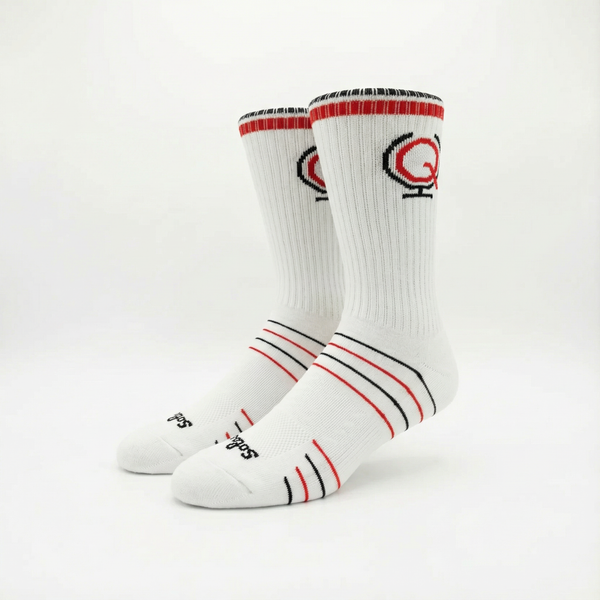
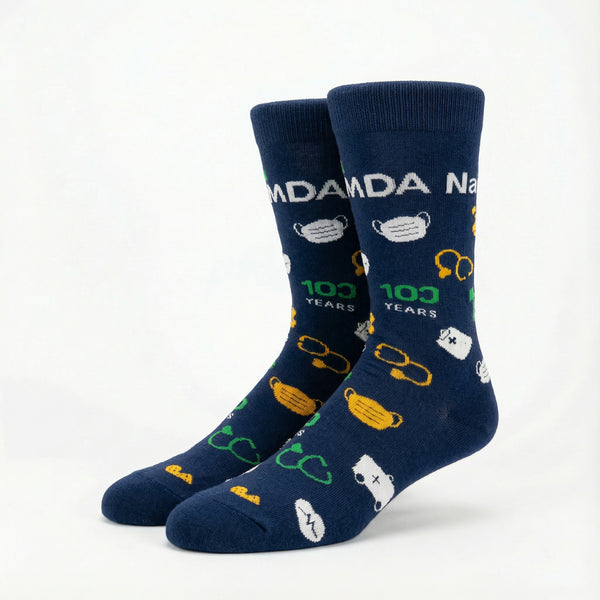
Race and event socks typically carry more information than a standard corporate sock — an event name, a date, a distance, and sometimes multiple sponsor logos on the same pair.
- Prioritise legibility over density — a sock crowded with three sponsor logos and event text becomes unreadable at speed; agree a hierarchy (event name/logo largest, sponsors secondary) before finalising artwork
- Decide on branding method by lifespan — knit-in (jacquard) construction holds up if the sock is meant to be worn repeatedly after the event; printed branding is a reasonable, cheaper choice for a genuine one-time finisher's item
- Confirm sponsor logo placement compliance — some events have sponsorship agreements dictating minimum logo size or specific placement, which needs to be communicated to the supplier before production, not discovered afterward
Our own compression sock manufacturing guide covers a closely related buyer type — runners specifically searching for race day socks with a performance benefit alongside branding — worth reading if your event or club is weighing a compression-style option.
Timing Your Order Around Race Day
Unlike a corporate gifting order, a race sock has a genuinely immovable deadline — the event date doesn't move if production runs late.
Submit your design brief and confirmed participant count at least 6-8 weeks ahead of race pack distribution, not the event date itself — race packs are typically assembled and distributed days before the event, which moves your real deadline earlier than it first appears. If you're inside that window, ask specifically about Express Production availability rather than assuming standard timelines will compress on their own.
What to Check Before Ordering for an Event
- Confirm final participant numbers as early as possible — a race sock order is one of the few custom sock categories where the quantity is genuinely hard to move once production starts
- Request a physical sample and, ideally, have someone actually run in it before committing to the full order
- Get a written delivery date tied to your race pack assembly date, not the event date itself
- Clarify what happens with a shortfall or overage — race participation numbers can shift right up to event day, so ask how a supplier handles a late top-up order
- Confirm branding method against lifespan — printed for a genuine one-time finisher item, knit-in for a club sock worn repeatedly
Frequently Asked Questions
What's the difference between custom running socks and custom crew socks?
"Crew socks" describes the general ankle-to-mid-calf length and construction used across most custom sock categories. A running sock is that same crew construction with athletic-specific features layered in — arch support, moisture management, reinforced heel and toe. For most race and club use cases, a well-built athletic crew sock covers the requirement without needing a highly specialised running-only construction.
How can I get cheap custom mens athletic socks without sacrificing quality where it matters?
Focus savings on branding method (printed rather than knit-in, if the sock only needs to survive one event) and lean into volume pricing at higher participant counts, while keeping material and heel/toe reinforcement at a standard that suits the actual distance and conditions of your event.
How far ahead should I order socks for a race or charity run?
Work backwards from your race pack assembly date, not the event date — submit your design brief and confirmed quantity at least 6-8 weeks before packs need to be ready, accounting for artwork approval, standard production (typically around 3 weeks), and shipping.
Can sponsor logos and the event date go on the same pair?
Yes, though legibility suffers if too much is crowded onto one sock. Agree a visual hierarchy — usually event name/logo primary, sponsors secondary — before finalising artwork, and confirm any sponsorship agreement requirements around logo size or placement in advance.
Do run clubs need a different sock than a one-off charity race?
Generally yes in construction priority: a club sock worn repeatedly across training sessions benefits from knit-in branding and athletic-grade durability, while a one-time charity or fun-run finisher sock can reasonably use printed branding at a lower cost, since it only needs to perform well once.
Ordering socks for a race, run club, or charity event?
Free artwork mockup within 12 hours — confirm construction, branding method, and quantity before you commit to the full order.
Request Free Mockup →