


Sock sizing is measured differently to shoe sizing, and the conversion between US, UK, EU, and AU systems trips up even experienced buyers ordering internationally. This chart breaks down sock sizes across all four systems for men, women, and kids, plus how sock sizing actually relates to shoe size and where one-size-fits-most construction changes the equation entirely.
How Sock Sizing Actually Works
Sock sizes are typically expressed as a range (e.g., "9-11") rather than a single number, because knit fabric stretches to accommodate a span of foot sizes rather than requiring an exact match the way a shoe does. Sock size numbers generally correspond more closely to shoe size than to foot length in centimetres, which is why most sock size charts are built around shoe size ranges rather than a direct measurement.
The practical takeaway: unless you're buying a highly specific compression or medical-grade sock, sock sizing has meaningful overlap built in — a "9-11" sock is designed to fit comfortably across that shoe size range, not just at the midpoint.
Why Material Affects How a Size Chart Actually Performs
Two socks labelled with the identical size range can fit noticeably differently depending on elastane or spandex content in the knit. A higher-stretch blend genuinely covers a wider real-world range than the size label alone suggests, while a low-stretch, dense cotton knit fits closer to the middle of its stated range and less comfortably at the edges. This matters most for anyone ordering close to a size boundary — if your foot sits right between two size bands on the charts below, checking the specific product's material composition, not just the printed size range, gives a better sense of which way to round.
Men's Sock Size Chart: US, UK, EU, AU
| US Shoe Size | UK Shoe Size | EU Shoe Size | AU Shoe Size | Sock Size (US) |
|---|---|---|---|---|
| 7-8.5 | 6-8 | 40-42 | 6-8 | 9-11 |
| 9-12 | 8.5-11.5 | 42.5-46 | 8.5-11.5 | 10-13 |
| 12.5-15 | 12-14 | 46.5-49 | 12-14 | 13-15 |
Women's Sock Size Chart: US, UK, EU, AU
| US Shoe Size | UK Shoe Size | EU Shoe Size | AU Shoe Size | Sock Size (US) |
|---|---|---|---|---|
| 5-7.5 | 3-5.5 | 36-38 | 3-5.5 | 4-10 (or "9-11" in unisex sizing) |
| 8-10.5 | 6-8.5 | 38.5-41 | 6-8.5 | 9-11 |
| 11-12.5 | 9-10.5 | 41.5-43 | 9-10.5 | 10-13 |
Worth knowing: a lot of athletic and crew sock ranges are sold in unisex sizing (typically "9-11" or "10-13"), where women's shoe sizes map onto the same size band as a smaller men's range. This is standard practice, not a sizing error — check whether the specific product is unisex or gender-specific sized before assuming a mismatch.
Kids' Sock Size Chart by Age and Shoe Size
| Approximate Age | US Shoe Size | UK Shoe Size | Sock Size |
|---|---|---|---|
| 1-3 years | 4-8 | 3.5-7.5 | Toddler (approx. 6-8) |
| 4-6 years | 9-13 | 8.5-12.5 | Youth Small (approx. 8-9.5) |
| 7-10 years | 13.5-4 | 13-3.5 | Youth Medium (approx. 9-11.5) |
| 11+ years | 4.5+ | 4+ | Youth Large / Adult crossover (approx. 11-13) |
Kids' sizing has the widest variation between brands of any category on this chart, since growth rate and foot shape vary significantly by age. For a team or school order specifically, our custom kids sports socks guide covers roster sizing considerations for youth programs in more depth, including how OSFM sizing does and doesn't work across a wide age range.
One-Size-Fits-Most: When a Chart Isn't Needed
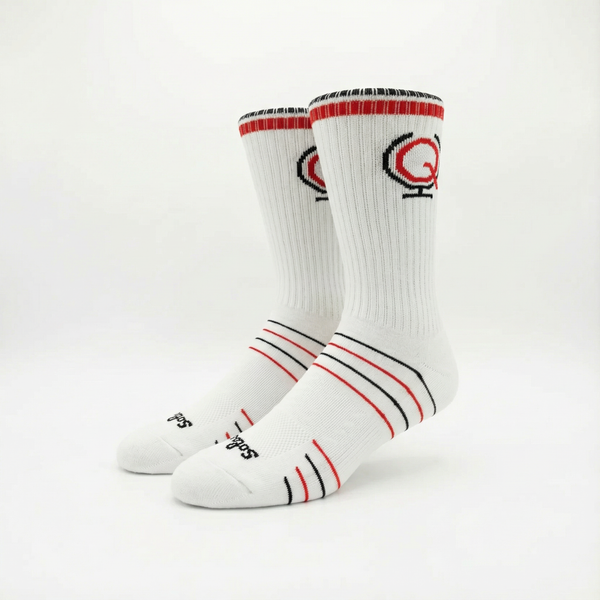
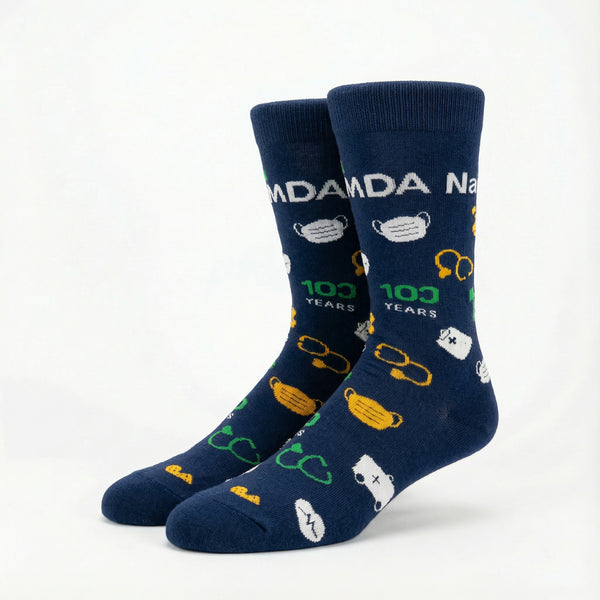
Most custom and corporate sock programs, including Solos' adult product lines, use one-size-fits-most (OSFM) construction rather than splitting an order across the size bands in the charts above. This is a deliberate manufacturing choice, not a shortcut — OSFM sock fabric is knit with enough stretch to comfortably cover roughly a US 6 to 12 adult shoe size range in one construction, which simplifies bulk ordering, keeps per-unit pricing consistent, and removes the sizing-guess problem that other apparel gifts run into.
The size charts above remain useful for understanding conversions between regions, and for kids' programs where age-based growth genuinely does require size variation — but for most adult corporate, team, and gifting orders, OSFM covers the requirement without needing to reference a chart at all.
Why Suppliers Prefer OSFM for Bulk Orders
From a production standpoint, OSFM removes a significant layer of complexity from a bulk custom sock order. Splitting a 200-pair corporate order across three or four size bands means separate production runs, separate inventory tracking, and a higher chance of ending up with leftover stock in one size and a shortfall in another — a real, recurring problem in apparel gifting that OSFM sidesteps entirely. For the buyer, this translates into simpler ordering (no size collection needed from a full staff or team list) and more predictable per-unit pricing, since the supplier isn't pricing in the inefficiency of multiple smaller production runs.
Sizing Considerations for Custom and Team Orders
- Confirm OSFM range against your actual recipient list — particularly relevant for a program with unusually large or small average foot sizes, such as a basketball team or a youth program
- For kids' and youth programs, confirm the specific age/size bands a supplier's construction actually covers, rather than assuming one OSFM youth size spans an entire multi-age program
- For international orders, don't assume shoe size numbers translate directly — a UK 8 and a US 8 are different actual sizes, and sock size labelling conventions can vary by region even when the underlying fit is similar
Our custom socks buyer's guide and team bulk ordering guide both cover sizing as part of the broader ordering decision, alongside material and branding method.
Sizing for Multi-Region Orders
Companies gifting or kitting out staff and teams across multiple countries face a specific sizing challenge: the same nominal shoe size means a different actual fit depending on which regional system a recipient is used to reporting. If you're collecting size preferences from a distributed team spanning the US, UK, and Australia, it's worth asking recipients to confirm which sizing system they're using rather than assuming a bare number is unambiguous — or, more simply, defaulting to an OSFM product specifically to avoid this cross-region ambiguity altogether.
Frequently Asked Questions
How do I know what sock size I need?
Sock size corresponds most closely to shoe size rather than a direct foot measurement — check your regional shoe size against the appropriate chart above, keeping in mind that sock sizes are given as a range to accommodate natural stretch.
Is a UK sock size the same as a US sock size?
No — UK and US shoe sizes differ by roughly a size and a half for men and two sizes for women, and sock sizing follows the same regional conversion. Always check the specific chart for your region rather than assuming the number matches directly.
What does "one-size-fits-most" actually cover?
OSFM sock construction typically comfortably covers roughly a US 6 to 12 adult shoe size range in one product, using knit stretch rather than multiple discrete sizes. It's the standard approach for most corporate, team, and gifting sock programs.
Do kids' socks need to be ordered by exact age?
Age is a reasonable starting guide, but foot size varies more than age alone predicts, especially across a wide range like a full school program. Checking actual shoe size against the kids' chart above gives a more reliable fit than age alone.
Can I order custom socks in any size?
Yes — Solos offers custom sock ordering across multiple regions, including the US, UK, and Australia, with OSFM as the standard adult sizing approach and specific youth sizing available for kids' team programs.
Why do sock sizes overlap instead of being one exact number?
Sock knit fabric stretches to accommodate a range of foot sizes, unlike a rigid shoe. This means a "9-11" sock is engineered to fit comfortably across that whole span rather than fitting only a single foot length precisely, which is why sock sizing is expressed as a range on nearly every chart, in every region.
What should I do if my foot size falls right between two chart bands?
Check the specific product's material composition before deciding — a higher-stretch blend with more elastane content generally covers a wider real-world range than the printed size label suggests, so it may comfortably fit even at the edge of a size band, while a lower-stretch cotton-heavy knit fits more precisely to the middle of its range.
Ready to order custom socks in the right size?
Free artwork mockup within 12 hours — confirm sizing for your region and recipient list before you commit to the full order.
Get a Quote →